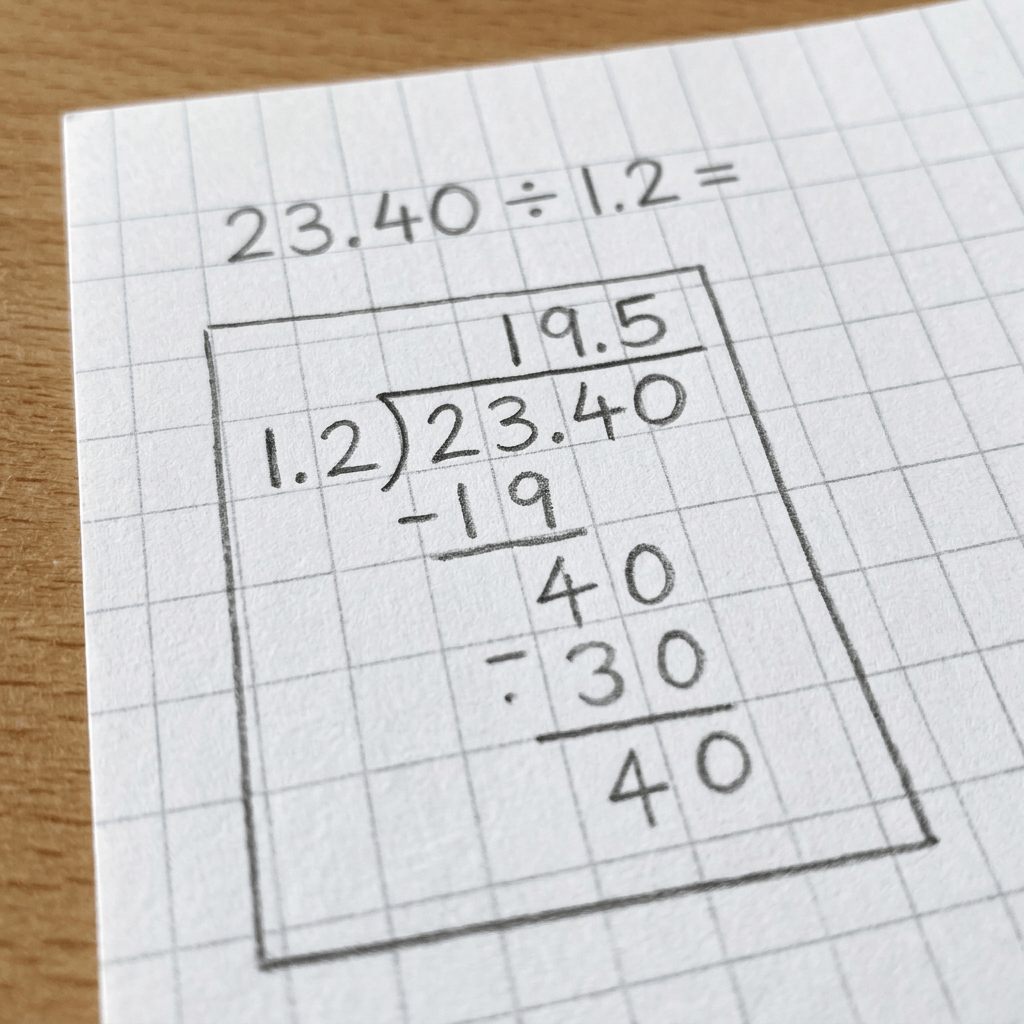
Many years ago on a school night in July, my grandmother was celebrating her birthday, and she had visitors. When you are 8 or 9 years old, having visitors is somehow exciting! It was also the night before my mathematics term examination. Mathematics and I never got along, pure hate is what I felt for it. Although now I’ve matured and our relationship is of the love-hate genre.
Twenty-four years since that night, I am now taking a course on Investments as part of my MBA. The professor began her lectures with a warning about its difficulty, primarily because the course was pregnant with mathematics. A few weeks into the course, and every lecture is one calculation after another. The equations all look like Greek to me. Oh wait! They are quite literally in Greek, but lawyers know Latin not Greek. Just to get through one lecture, I have to spend hours upon hours, practising the calculations before class. Even then, the friction between my brain and maths is not more evident than when I display absolutely hideous levels of math-based stupidity in class. Yet, the one thing that is true of mathematics for me is that if I focus and put in extra effort, I can get it done.
This I learnt on that night my grandma celebrated her birthday. Our family circumstances were such that Ammi (what we called our mother) worked both fulltime and overtime to provide for us. Sri Lanka’s circumstances were such that you have to leave home at 6.00 a.m. for a job that started at 8.30 a.m. to avoid tardiness. Ammi would leave home very early to take the bus with my older brothers, drop them off at school and head to her own office nearby. I on the other hand, left for school in a privately operated school van. It was our family’s helper who walked me to and back from the school van. Ammi would then return home late, even if she hadn’t worked overtime because traffic in Colombo was impossible. Our bedtime was 8.00 p.m., which meant that we had only an hour or so to spend with Ammi. Her absence wasn’t an abandonment, but a necessity for our family’s survival. In that short window before bedtime, she would check our school books and we’d be disciplined if teachers had any complaints. At other times, she was simply too exhausted after a long day of work and wore a frown on her face. Time with Ammi became and increasingly scarce commodity.
However, one distinct memory of her resonates within me even to this day. On that night of grandma’s birthday, Ammi took me away from the celebratory activities into my bedroom. We leant against the pale pink pillows on a bed neatly draped in salmon pink sheets. Ammi opened my mathematics book only to find my failed attempts at long division. In the two or so hours that followed, she taught me long division, step by step, never letting her focus off me as if when a mother watches her baby take their first steps. She had successfully taught me what my teachers couldn’t.
Perhaps the combination of mathematics in the Investments course and the nostalgia of Ammi’s birthday in October, is the reason this memory of learning long division has been perched at the forefront of my thoughts in the weeks past. It was after all, the one and only time I remember her teaching me anything related to my education.
Ammi and I spent years never truly understanding each other, or maybe we did, but too much water had passed under the bridge. I had become accustomed to a life where I didn’t need my mother for emotional support. Nothing illustrates the nature of our relationship more clearly than a memory from long ago: when I got my first period, even though Ammi was in the house, I turned to our family’s helper, not to her. We were somewhere on the spectrum of estrangement despite living under the same roof.
This is not say we didn’t love each other, but outward displays of affection were uncommon. When my mother was first diagnosed with cancer I was sitting for my Ordinary Level examinations. She and my father delayed breaking the news to the family until I had finished the exams (though I suspected it). When they finally did, I spent the entire evening with my head in the closet, sobbing into my clothes hoping it would muffle the sound of my pain. Fast forward to a few weeks after she had surgery, she went back to work as if nothing ever happened. She was freakishly strong that way. We had gone through a literal life and death scenario, yet we never grew close to each other and being in each other’s presence felt very unnatural.
In another life and death scenario, Ammi and I sat in the waiting lounge of the hospital while my father went through a really complicated open heart surgery after having survived several heart attacks since I was 12 years old. A few weeks’ prior, Ammi and I had witnesses the horror on the doctor’s face when he did an angiogram; the contrast dye couldn’t find its way through the heart and most of the heart was dark. We sat in that waiting lounge, with the weight of these horrors on our shoulders. Yet we never really leant on each other for support.
That same year, she retired from her job and well, she was finally home. However, I was away. Weekdays at a fulltime job, and weekends doing my Bachelor’s. Every morning and night, studying in the isolation of my room. Yet again, we never grew close.
It wasn’t until about August 2016 that I finally broke down the walls that I had put up between my mother and me. To this day I wish I didn’t have those walls. Upon deeper reflection I am certain I never deliberately built those walls. They were of an organic nature, like a build up of sediment, except this sediment grew thick, tall and impenetrable. That year Ammi confided in me that her greatest regret was not having a close relationship with me. Finally a sledgehammer met those walls, but it was too late. A few months later she passed. Even as I write, I recall how in our last conversation I couldn’t tell her I loved or even hug her for reasons that I cannot bring myself to talk about even to this day. That moment turned out to be her last conscious moment with me. The last words she heard from me may have been as mundane as ‘let me brush your teeth.’
Nearly ten years later, Ammi’s death stings like it was yesterday. I doubt there will ever be a day that the memory of her doesn’t ache. Vocabulary in all of the four languages I speak would fail to convey the pain of losing a mother. And despite what some people told me at her funeral, her death not coming to me as a surprise or having had her for 23 ‘long’ years doesn’t make it any less painful. Losing a mother is exactly what it is; losing a mother.
The agony may never stop. Nonetheless, there are moments of great clarity and joy attached to the memories of her. A good friend recently told me that we can only solve about one percent of our problems. I admit that I agreed with him quite passively, it was not some revolutionary thought. However, I now understand what he truly meant. Many moons ago, sitting beside me on those pink sheets, Ammi had given me this same key to life: sometimes there will be no perfect division, we will need to add decimals to life just as in long division. My relationship with my mother – what it was, what it wasn’t, and what it could have been – will continue to shape my life. How it all shapes my life remains within my control.




Leave a Reply